
TL;DR
Kratom is a plant from Southeast Asia that can act like a stimulant at low doses and like an opioid at high doses.[1][2]
The DEA states that kratom use can lead to addiction, and that withdrawal has been reported in chronic users.[2]
Kratom has no FDA-approved medical use, and products are not held to the checks that apply to prescription drugs.[1][2]
Kratom use disorder can be assessed using the criteria clinicians already use for substance use disorders.[3]
You do not have to stop alone. Bright Mission Recovery offers evaluation and treatment.
Table of Contents
Introduction
Kratom is sold at gas stations, smoke shops, and online, often next to energy shots and herbal teas. That placement makes it look harmless. Many people who ask "What is Kratom and is it addictive?" are asking because they, or someone they love, can no longer go a day without it.
This article gives you a straight answer. We cover what kratom is, what it does, what the evidence says about dependence, what withdrawal feels like, and where to turn for help. If you are worried right now, you can skip ahead to the treatment section and call us.
What is kratom? Origins, forms, and common uses
"Kratom" refers to Mitragyna speciosa, a tree native to Southeast Asia, and to products made from its leaves that are sold as herbal supplements.[1] The DEA notes that Thai and Malaysian laborers and farmers traditionally chewed the leaves as a stimulant to get through hard physical work.[2]
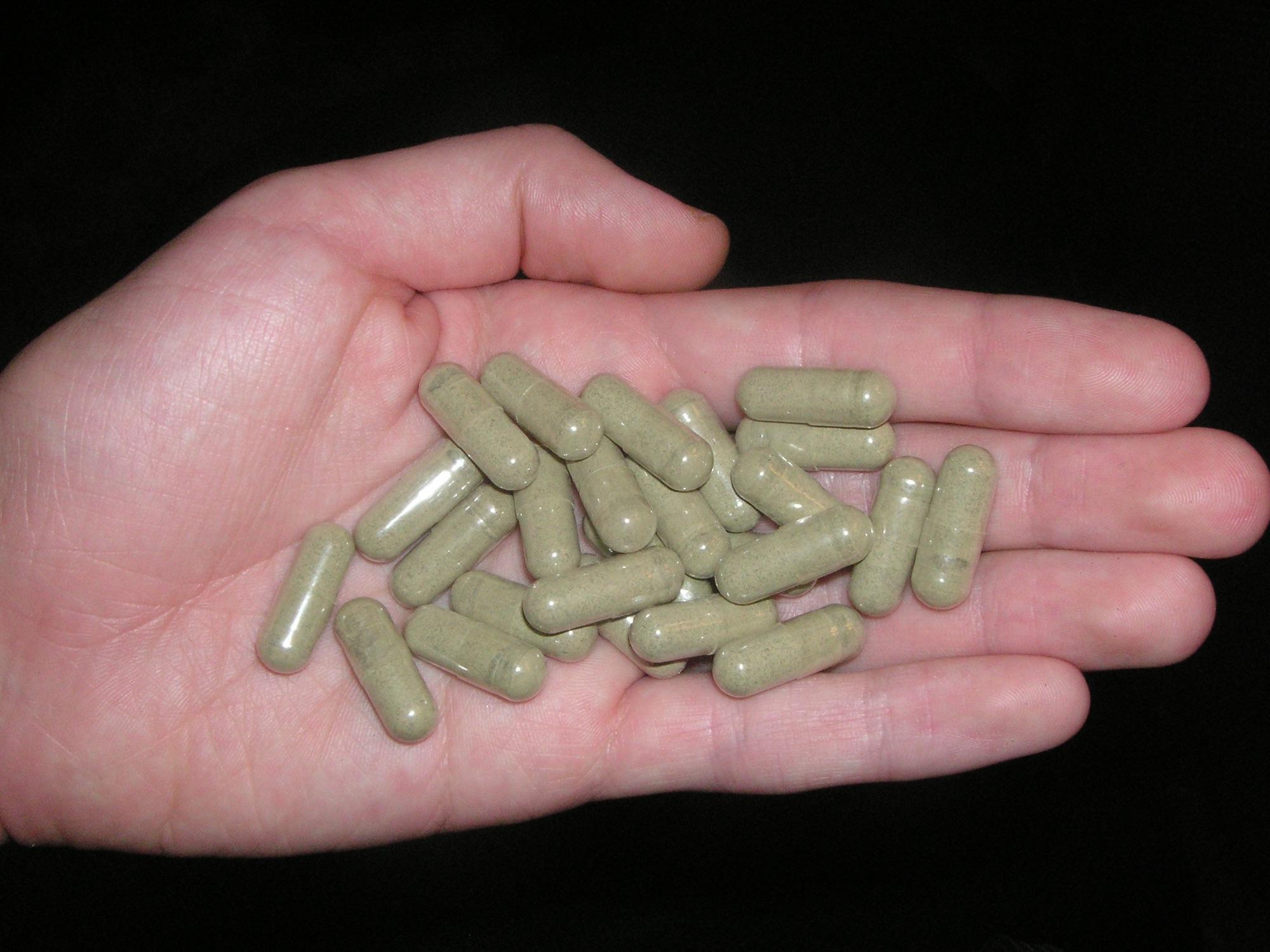
Today the leaves are turned into powders, capsules, and highly processed extracts.[2] Street names include thang, kakuam, thom, ketum, and biak.[2]
NIDA reports that people use kratom to ease drug withdrawal and cravings (especially from opioids), pain, fatigue, and mental health problems.[1] Those are the reasons people give. They are not approved uses.
[Insert image of kratom leaves and common product forms here]
How kratom affects the brain and body
Kratom leaves contain many active compounds. The DEA says at least 54 alkaloids have been isolated, and the two best studied are mitragynine (about 66% of the total alkaloid content) and 7-hydroxymitragynine (under 2%).[2]
In animal studies, both compounds relieve pain much like morphine does, and naloxone can block that effect. Both also fully substitute for morphine in a drug discrimination test.[2] This is why people describe kratom as acting on the body in opioid-like ways.
Dose | Reported effects |
|---|---|
Low | Alertness, physical energy, talkativeness, sociable behavior |
High | Sedation and euphoria (opioid-like effects) |
Effects start within 5 to 10 minutes and last 2 to 5 hours. Short-term side effects include nausea, itching, sweating, dry mouth, constipation, increased urination, and loss of appetite.[2]
Is kratom addictive? What research says about dependence
Yes, it can be. The DEA states plainly that kratom consumption can lead to addiction, and that withdrawal has been reported among chronic users.[2] So when people ask "What is Kratom and is it addictive?", the honest answer is that it is a plant with opioid-like activity and a real potential for dependence.
We cannot give you a firm number for how fast dependence develops. NIDA says much remains unknown about the short- and long-term health effects of kratom.[1] What we see in practice is that daily use, rising doses, and using it to avoid feeling sick are the patterns that matter most.
Long-term use has been linked to weight loss, insomnia, skin darkening, liver toxicity, and constipation. The DEA also describes several cases of psychosis, with hallucinations, delusions, and confusion.[2]
Kratom withdrawal symptoms and timeline
Our sources confirm that withdrawal occurs in chronic users, but they do not give a day-by-day timeline, so we will not invent one.[2] How long and how hard withdrawal is depends on how much you use, for how long, and your health. A medical evaluation is the only reliable way to know what to expect for you.
Because kratom acts on opioid pathways, many people use it to get through opioid withdrawal.[1] That can leave the original problem in place and add a second one. If you use other substances too, tell your care team. Deaths linked to kratom are rare compared with other drugs, but NIDA notes that nearly all cases involved other drugs or contaminants.[1]
Is kratom legal and regulated? Safety concerns
Kratom products are currently legal and sold in many areas, though U.S. and international agencies are still reviewing the evidence.[1] Rules differ by place, so check your own state and city.
Legal does not mean tested. The DEA says kratom has no approved medical use in the United States and has not faced the regulatory scrutiny that applies to prescription drugs, dietary supplements, or food additives.[2] Alkaloid content also varies with plant strain and maturity, so two products can hit very differently.[2]
NIDA lists rare but serious effects, including psychiatric, cardiovascular, gastrointestinal, and respiratory problems.[1]
Signs of kratom use disorder and when to get help
Clinicians use the DSM-5-TR, the standard classification of mental disorders in the United States, to define substance use problems.[3] You do not need a diagnosis to ask for help. These signs are worth taking seriously:
You take more, or more often, than you meant to.
You feel sick, anxious, or restless when a dose wears off.
You have tried to cut back and could not.
Kratom is affecting work, money, sleep, or relationships.
You use it to manage opioid cravings or withdrawal.
If you are in crisis, SAMHSA lists the National Helpline and the 988 Suicide & Crisis Lifeline, and its FindTreatment.gov locator can help you search for care.[4]
Kratom addiction treatment options at Bright Mission Recovery
Treatment starts with an assessment of what you use, how much, and what else is going on, including mental health and other substances. The ASAM Criteria describe a person-centered approach to treatment plans for addiction and co-occurring conditions.[5] We build care around that kind of whole-person evaluation.
At brightmissionrecovery.com you can learn about our programs and ask about next steps. Your plan may include medical supervision during withdrawal, therapy, and support after discharge. We set the plan after the assessment, not before.
[Insert image of a Bright Mission Recovery counselor meeting with a client here]
Frequently Asked Questions
Q: What is kratom and why do people use it?
A: Kratom is an herbal substance from the leaves of a Southeast Asian tree. It can produce stimulant- and opioid-like effects. People report using it for withdrawal symptoms, cravings, pain, fatigue, and mental health problems.[1]
Q: Is kratom addictive, and how quickly can dependence develop?
A: The DEA says kratom use can lead to addiction.[2] The sources we reviewed do not give a timeframe for dependence, and NIDA notes much is still unknown.[1] If you use it daily or feel unwell without it, get evaluated.
Q: What are the withdrawal symptoms of kratom, and how long do they last?
A: Withdrawal has been reported in chronic users.[2] Our sources do not give a specific symptom list or duration, and it varies by person. A clinician can tell you what to expect based on your use.
Q: Is kratom legal, and is it approved by the FDA?
A: Kratom is currently legal and available in many areas, but the FDA has not approved it for any medical use.[1] Local laws differ, so check where you live.
Q: How is kratom addiction treated, and can I detox safely at home?
A: Treatment begins with an assessment and a plan that fits your needs, including any co-occurring conditions.[5] We cannot say home detox is safe for everyone, especially if you use other substances or have health conditions. Talk to a medical professional before you stop.
Conclusion
So, what is Kratom and is it addictive? It is a plant with stimulant and opioid-like effects that has no approved medical use, and according to the DEA it can lead to addiction and withdrawal.[2] Being legal and easy to buy does not make it safe to depend on.
If you recognize yourself in this article, reach out to brightmissionrecovery. Call us or visit brightmissionrecovery.com, and we will talk through an assessment with you.
References
National Institute on Drug Abuse. Kratom. - https://nida.nih.gov/research-topics/kratom
Drug Enforcement Administration, Diversion Control Division. Kratom (Mitragyna speciosa). - https://www.deadiversion.usdoj.gov/drug_chem_info/kratom.pdf
American Psychiatric Association. Diagnostic and Statistical Manual of Mental Disorders (DSM-5-TR). - https://www.psychiatry.org/psychiatrists/practice/dsm
Substance Abuse and Mental Health Services Administration. Home | SAMHSA. - https://www.samhsa.gov
American Society of Addiction Medicine. ASAM - American Society of Addiction Medicine. - https://www.asam.org